For the LOVE of an Industry – It’s All About Perspective
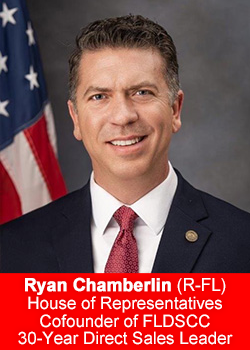
By Representative Ryan Chamberlin
When I first entered politics as a member of the Florida House of Representatives, I didn’t fully appreciate how true one simple phrase would become:
“It’s all about perspective.”
Now, to be fair, I had already learned this lesson in business and in life. But after spending time in government—where laws are sometimes crafted with enthusiasm but occasionally without much real-world perspective—I’ve found myself asking a few more questions than I used to.
And interestingly enough, those same questions apply to the conversation happening inside the direct selling industry today.
You’ve probably heard the debate.
Is direct selling outdated?
Is the model doomed?
Should companies abandon the traditional direct sales structure and move to an affiliate model because “that’s where things are going”?
After spending 25 years building, growing, sustaining, and now advising companies in this channel, I’ve come to a conclusion that may sound familiar:
It’s all about perspective.
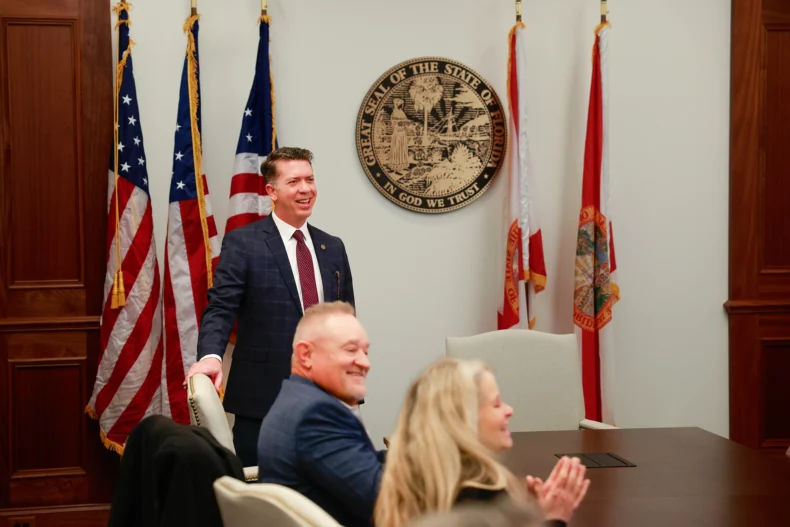
The Difference Between WANT and LOVE
Over the years, I’ve noticed something interesting—especially during moments when companies face tough decisions.
Not all founders view the industry the same way.
There are generally two types of owners:
- Those who WANT to make money using the direct sales model.
- Those who LOVE the direct sales model because it changed their life.
At first glance, those might sound similar. After all, most entrepreneurs want to make money. That’s not a crime—it’s called business.
But the perspective between those two motivations is very different.
The WANT-driven founder sees the model primarily as a vehicle for scalability and revenue. If another model appears more profitable or easier to manage, they may pivot quickly.
The LOVE-driven founder sees the model as a mission and a community—because they once stood in the field themselves, building, struggling, learning, and growing.
And that difference shows up in how decisions get made.
Looking at the Exits
Over the past decade, we’ve seen an increased number of companies exit the direct sales model. Some sold their assets. Others converted to affiliate programs. A few simply shut down altogether.
When enough companies exit a model, it naturally raises a bigger question:
Is the industry itself declining?
But before jumping to that conclusion, it might be worth asking another question:
Do the companies that leave the industry have something in common?
In many cases, they do.
If you remove the companies led by founders who had five or more years of high-level field experience before becoming owners, the narrative of the industry starts to look very different.
And if the narrative changes, it can dramatically change the belief systems of the people watching from the outside.
Why Field Experience Matters
Founders who personally built organizations in the field often approach leadership differently.
Why?
Because they’ve lived it.
They’ve experienced the late nights, the small meetings, the early rejections, the leadership development, the personal growth, and eventually the breakthroughs that come with building a team.
So when a corporate decision affects the field, they don’t just analyze it—they feel it.
That creates a powerful internal filter.
Every compensation adjustment, marketing shift, or structural change gets run through a simple but important question:
“How will this impact the lives of the people building the business?”
That perspective acts as a kind of built-in protection mechanism for the field.
And over time, those small decisions compound into something incredibly important:
Culture.
Culture Is Built in Small Decisions
Even founders with strong field experience can make mistakes. No company is immune to bad calls or rough seasons.
But many of the exits we’ve seen in recent years share a similar origin story.
The companies were started by talented entrepreneurs who were attracted to the efficiency and scalability of the model, but who never fully understood the nuances of field leadership and culture.
So when sales cycles tighten or growth slows—as every industry eventually experiences—it’s easy to assume the problem is the model itself.
The instinct then becomes:
“Maybe the structure needs to change?”
Affiliate models appear simpler. Less compliance. Fewer leadership structures. Fewer moving parts.
But what often gets overlooked is that direct selling isn’t just a distribution model—it’s a leadership culture.
And when leadership culture is misunderstood, stability can quickly erode.
Field leaders begin to pause. They watch carefully. Some step back to see what direction the company will take before continuing to invest their credibility with their teams.
After all, leaders in the field carry something incredibly valuable:
Trust.
And credibility, once damaged, is not easily repaired.
What Happens When Owners Love the Industry
In contrast, founders who truly love the direct sales industry tend to respond differently during difficult seasons.
When challenges arise, they don’t immediately look for an exit door.
They tend to roll up their sleeves.
They put their field hat back on.
They reconnect with leaders, communicate openly, and double down on the relationships that built the company in the first place.
Why?
Because they don’t just see the business.
They see the people.
They remember the opportunities the industry created for them personally, and they feel a responsibility to protect those same opportunities for others.
That perspective leads to decisions driven less by short-term pressure and more by long-term stewardship.
The Cycles of the Industry
Every industry goes through cycles. Direct selling is no exception.
Those who love the industry understand this.
They know that growth periods are often followed by recalibration seasons. They know that culture, leadership development, and strong principles tend to outlast temporary tactics.
And most importantly, they know that the companies who navigate those cycles well often emerge stronger than before.
Those companies eventually become something rare and powerful:
Legacy companies.
The next generation of industry leaders.
So… Is Direct Sales Doomed?
From my perspective—after 25 years in the field and now observing leadership decisions from the unique vantage point of public service—the answer is no.
But the future of the industry may depend less on the model itself and more on the perspective of the people leading it.
Because in the end, the most successful companies aren’t simply run by entrepreneurs who discovered a scalable distribution system.
They’re led by people who once stood in living rooms, hotel meeting rooms, and coffee shops building teams… and who never forgot what that experience meant to them.
And when decisions are made through that lens, something powerful happens.
The culture stays strong.
Leaders stay confident.
And the opportunity continues to grow.
Which brings us back to that simple phrase that seems to apply in politics, business, and life alike:
It’s all about perspective.
The future of direct selling will not be determined by the model — but by the mindset of the people leading it.
About the Author
Ryan Chamberlin is a network marketing veteran with more than 25 years of experience building large organizations across the United States. Today, he serves in the Florida House of Representatives, where he works to educate policymakers and advocate for compliant growth and protection within the direct sales industry.
He has served on boards including the Direct Selling Association, the Association of Network Marketing Professionals, and the Florida Direct Sellers Coalition. He also advises companies on government relations, compliance strategy, leadership development, and building strategic relationships that strengthen and protect their brands.
Connect with Ryan at www.RyanChamberlin.com.
Disclaimer: At BFH, we strive to keep all content—articles, press releases, data—as accurate and current as possible at time of publishing. However, treat this content as a guide, not as definitive authority for business decisions. Publishing a press release does not imply Business For Home BV endorses a company or individual, nor guarantees its claims. No warranties or representations, expressed or implied, are made regarding the accuracy, completeness, or suitability of information provided on this website. All content is provided “as-is,” without liability for errors or usage. Always fact-check and conduct your own due diligence. BFH publishes press releases for the global Direct Selling / Network Marketing / Home Business community. Laws governing Direct Selling can vary greatly by country; BFH does not warrant that any company or content is in full compliance with various local or country-specific laws; it’s up to the reader to research, verify and comply with all applicable local regulations.